How to Clean Glass Stove Tops Without Scratching or Haze
Glass stove tops look beautiful when they are clean. The problem is they show everything. A quick boil-over, splattered sauce, or melted sugar can leave behind marks that seem permanent once the surface cools.
If you want to clean glass stove tops properly, the goal is not just shine. It is removing burned-on residue safely, without scratching the surface or leaving behind a cloudy film.
Why Glass Stove Tops Get Stained
When food spills on a hot surface, it bonds quickly. Sugary spills are the worst. Once they cool, they harden and cling tightly to the glass. Grease can also leave a dull haze that does not come off with water alone.
Hard water from cooking steam may also leave faint white spots over time. None of this means your stove is damaged. It just means it needs the right cleaning method.
The sooner you wipe up spills after cooking, the easier it is to keep your glass stove top looking new.
Mistakes That Damage Glass Cooktops
- Using abrasive pads that leave fine scratches.
- Applying harsh chemical cleaners that leave residue or streaks.
- Using metal tools at steep angles that can chip the surface.
Glass cooktops are strong, but they require gentle pressure and the right cleaner.
What You Actually Need
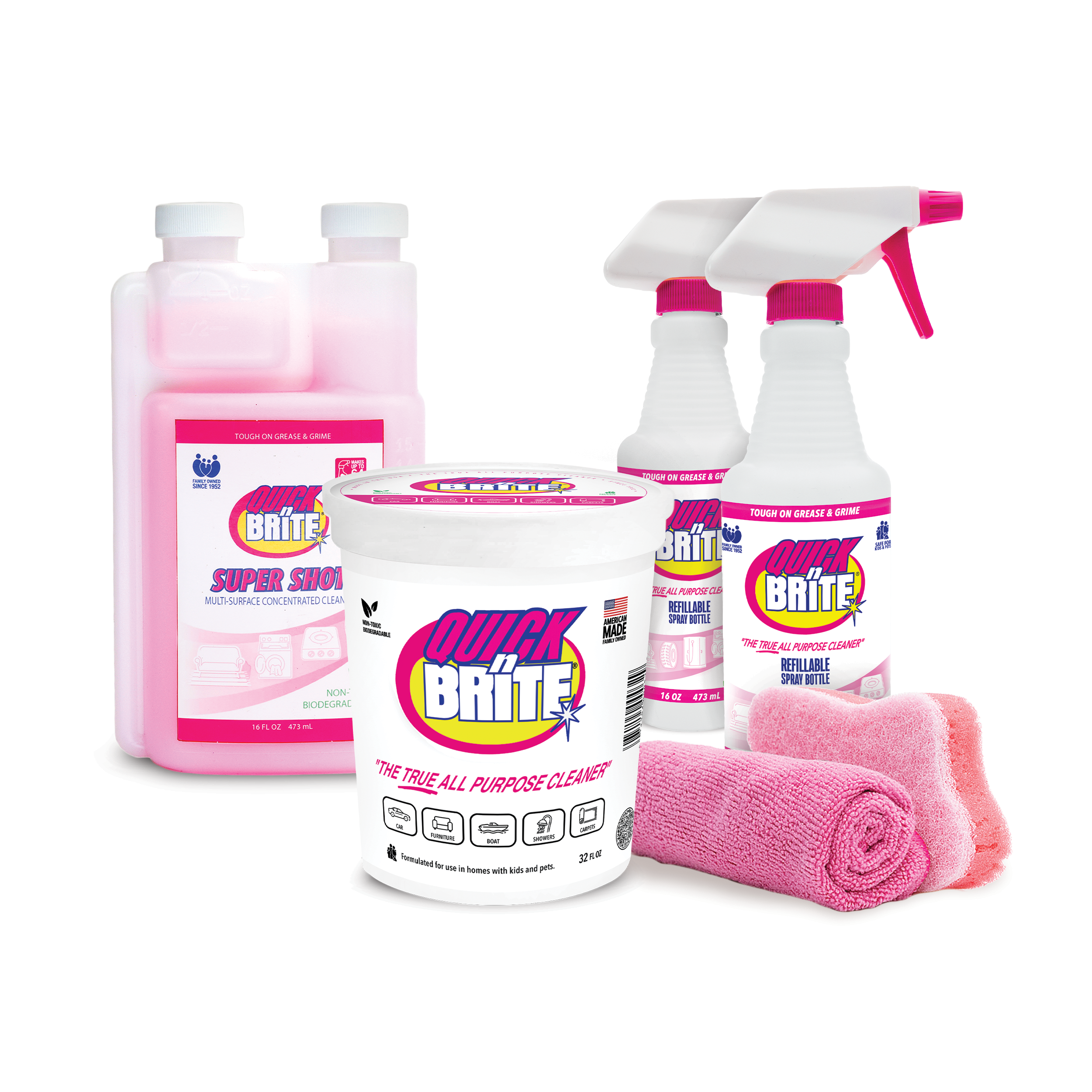
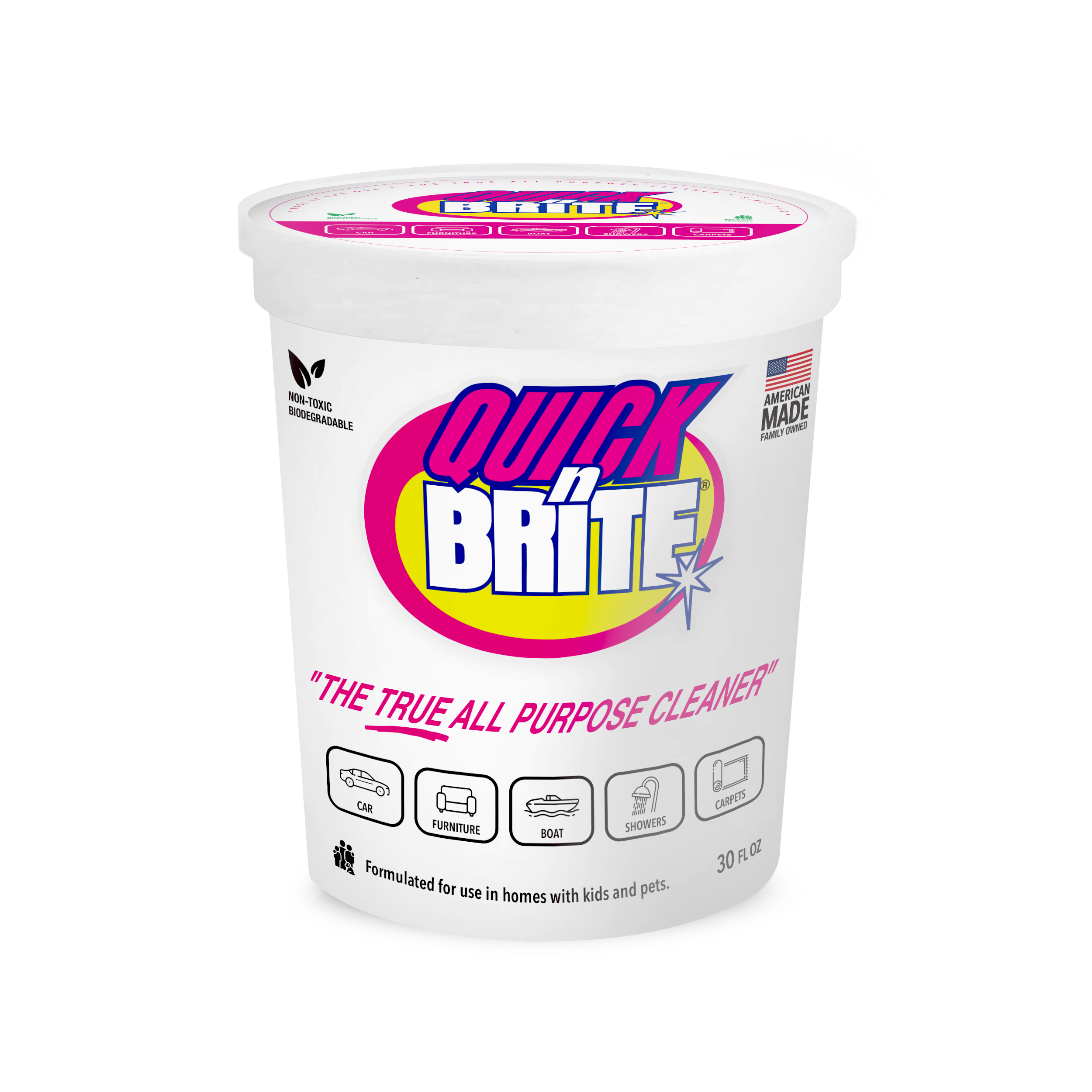
The Quick 'n Brite All Purpose Cleaning Kit includes a concentrated solution and tools designed for surfaces like glass cooktops.
Step-by-Step: Clean Glass Stove Tops the Right Way
1. Make sure the surface is completely cool
Never clean a hot cooktop. Cleaning solution can streak and you risk burns.
2. Remove loose debris
Wipe away crumbs or dry residue before applying cleaner.
3. Apply your cleaning solution
Mix the Quick 'n Brite Super Shot liquid according to package directions. Spread evenly across the glass.
4. Let it sit briefly
Give the cleaner a few minutes to soften grease and residue. This reduces scrubbing.
5. Gently scrub
Use circular motions with a non-scratch sponge. For hardened areas, use a plastic scraper held at a low angle.
6. Wipe and polish
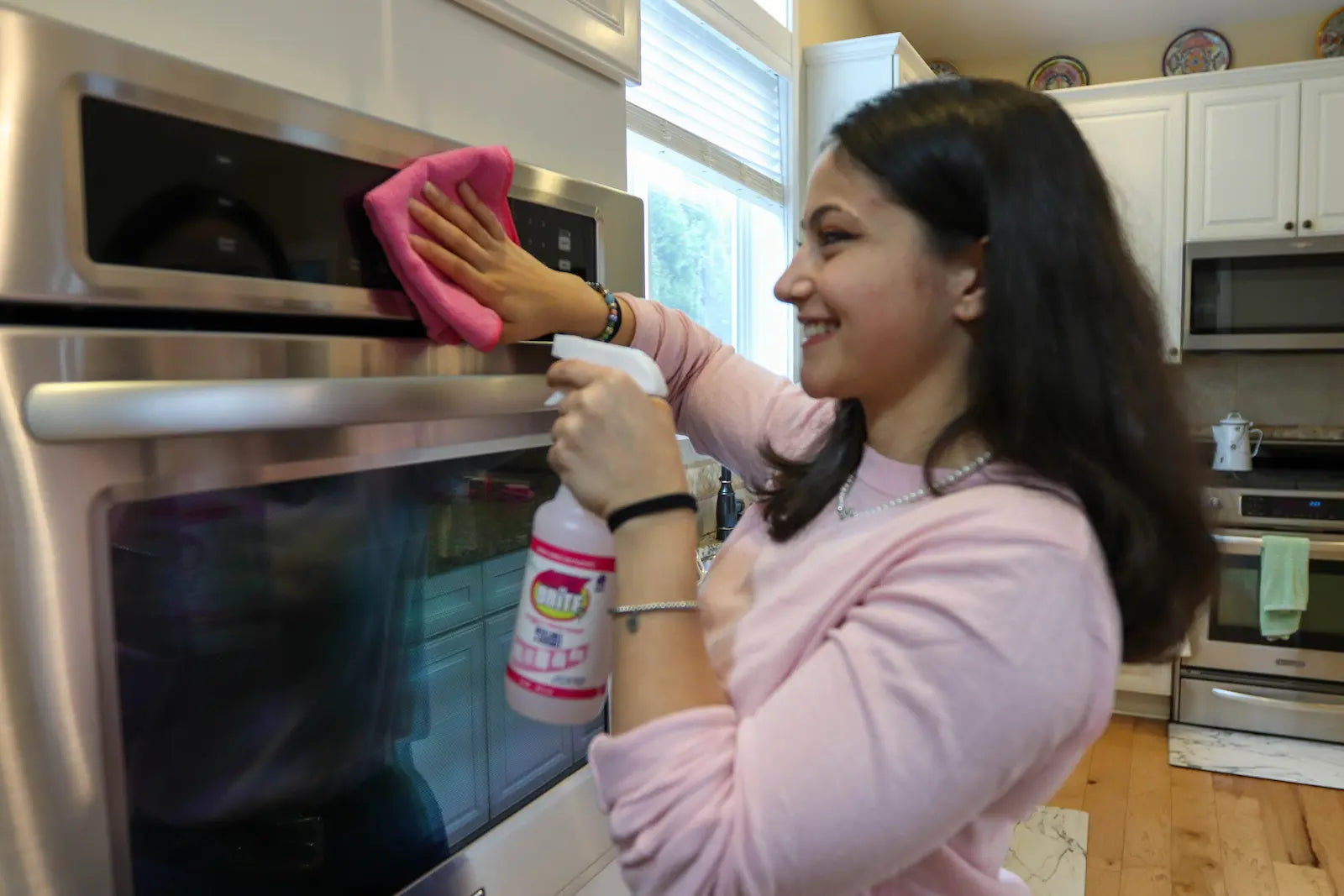
Remove residue with a damp microfiber cloth. Buff dry to eliminate streaks.
How to Remove Burned-On Food from Glass Cooktops
Burned-on food requires patience more than pressure. Apply cleaning paste directly to the area and allow it to sit longer before scrubbing gently.
If needed, repeat the process rather than increasing force. Excess pressure is what causes scratches.
Simple Maintenance Habits
- Wipe the surface after each use once cool.
- Use a light diluted solution for daily cleaning.
- Dry thoroughly to prevent water haze.
- Avoid sliding heavy cookware across the surface.
Consistent light cleaning keeps you from needing heavy scrubbing later.
Frequently Asked Questions
How often should I clean glass stove tops?
Light cleaning after each use prevents buildup. A deeper clean once a week keeps the surface clear and polished.
What is the best way to clean glass stove tops without scratching?
Use a non-scratch sponge, a microfiber cloth, and a gentle concentrated cleaner. Avoid abrasive pads and sharp metal tools.
How do I remove burned-on food from a glass cooktop?
Apply cleaning paste, allow it to sit, then gently loosen residue with a plastic scraper held at a low angle.
Can I use Quick 'n Brite on gas and electric glass cooktops?
Yes. It is safe for both types when used according to directions.